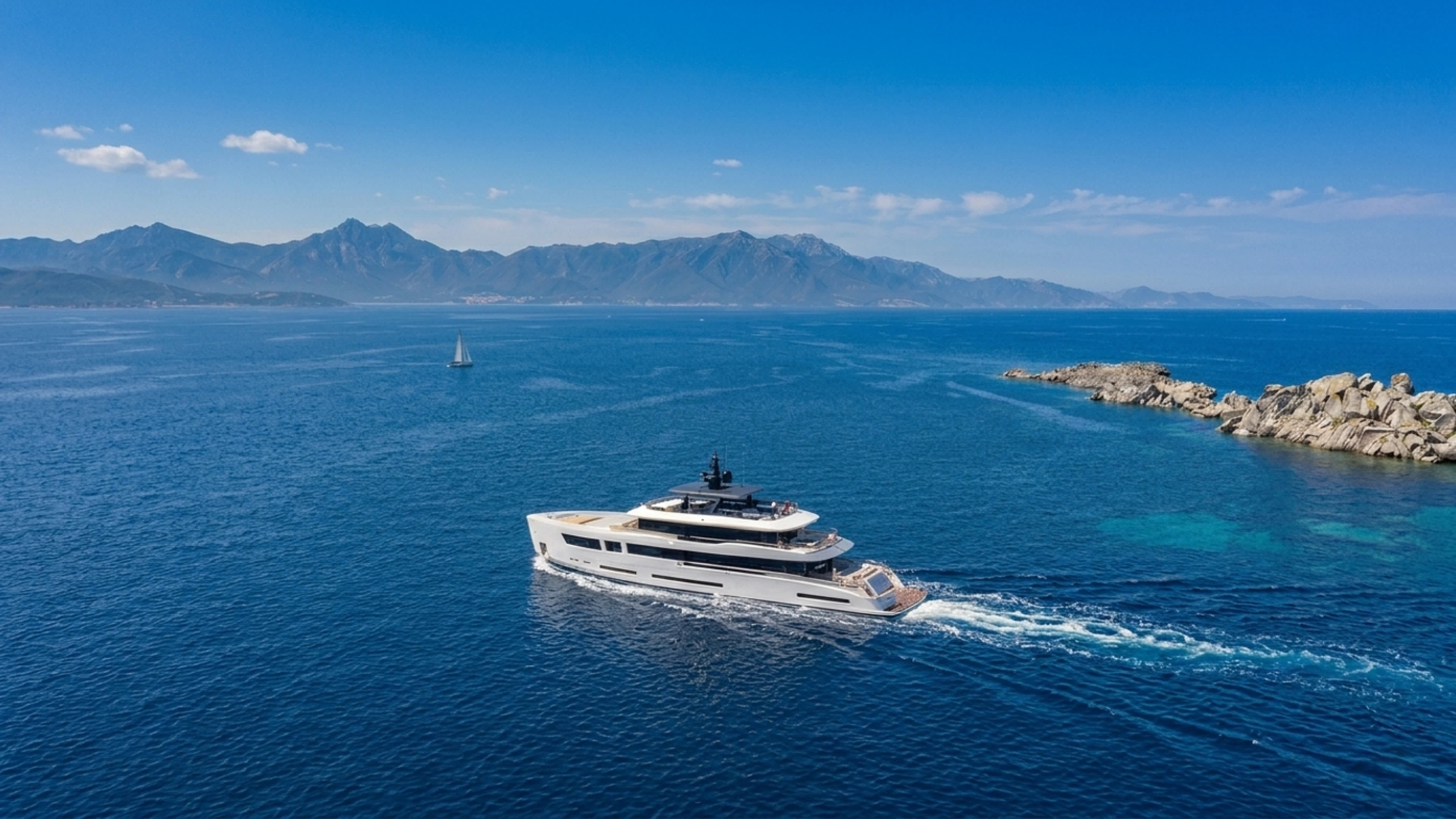
Gross tonnage is volume, not weight
The name misleads. Gross tonnage is not the yacht's displacement or physical weight. Under the international tonnage framework it is a calculated measure based primarily on the volume of enclosed spaces.
That is why two yachts of similar length can sit on opposite sides of an important GT threshold. A beamy yacht with several enclosed decks, a large beach club and substantial interior volume measures much higher than a slender yacht of comparable LOA.
For the designer, this turns enclosed volume into a regulatory decision. Adding a winter garden, enclosing a previously open deck or increasing the beam may deliver exactly what the owner wants while also moving the yacht into a different compliance regime. The right answer may still be to cross the threshold, provided the crossing is deliberate.
Why 24 meters keeps appearing
Twenty-four meters is a major dividing line in several yacht codes and load-line frameworks, although the exact method of measuring length matters. The relevant figure may be load-line length rather than the marketing LOA shown in a brochure.
Under the Red Ensign Group Yacht Code, for example, Part A applies to commercial yachts over 24 meters in load-line length that carry no more than 12 passengers. Malta's current commercial yacht framework likewise separates yachts below and above 24 meters.
For an owner moving up from a smaller yacht, crossing this boundary can mean a more formal survey, certification and operational environment, which is one reason technical advisers confirm regulatory length early instead of assuming the sales brochure provides the number that matters.
500 GT changes the operating architecture
Five hundred gross tons is another familiar design target. Yachts at 499 GT are common because remaining below 500 GT can avoid certain requirements that apply to larger commercial ships and yachts, depending on flag, use and voyage.
For ships engaged on international voyages, the 500 GT line is associated with major IMO frameworks such as the International Safety Management Code and the International Ship and Port Facility Security Code for the categories of ship to which those conventions apply. Flag-state yacht codes can also impose additional class, survey, manning and certification requirements at or above 500 GT.
The practical effect goes well beyond extra certificates. Crossing 500 GT can change who is qualified to crew the yacht, how she is managed and secured, what class requires, and how much administrative infrastructure sits behind her.
That is often entirely appropriate. A 700 GT yacht may serve the owner's brief far better than an artificially constrained 499 GT design. The mistake is treating 499 GT as a styling target rather than a commercial and operational choice.
Twelve passengers is a different kind of threshold
Under SOLAS, a passenger ship is generally a ship carrying more than twelve passengers. Twelve is the line. That definition is the reason conventional commercial superyachts so often advertise accommodation for twelve charter guests even when the yacht physically has space for more people.
Carrying 13 or more passengers on international voyages can move the yacht toward passenger-ship requirements. Specialized passenger-yacht codes exist in some jurisdictions for yachts designed to operate above twelve passengers, but the implications reach design and certification, lifesaving and fire safety, and the way the yacht operates day to day, all of which needs addressing from the beginning.
This is also why 'six guest cabins' has become such a common commercial arrangement. The cabin count is partly a market preference and partly a consequence of the passenger threshold.
3,000 GT becomes relevant as yachts get larger
As the fleet has grown, 3,000 GT has become an increasingly visible operational and certification line. Yacht officer certification pathways have historically distinguished between commands below 500 GT, below 3,000 GT and unlimited tonnage, although administrations continue to update qualification routes as the yacht fleet expands.
Flag and yacht-code requirements also become more demanding as yachts move into very large gross-tonnage ranges. Crew accommodation, safe-manning, class scope and convention requirements therefore deserve review well before a design migrates from a large yacht into what is operationally a small ship.
Design to the owner's use, then understand the consequences
There is a temptation to design backward from a regulatory number: keep the yacht at 499 GT, hold guest count at twelve, avoid another meter of regulatory length.
Sometimes that is exactly right. Sometimes it creates a yacht full of compromises: narrow circulation, insufficient crew space, undersized technical rooms, exterior areas enclosed in awkward ways purely to control tonnage.
A better process starts from the owner's actual requirements, models where the proposed design sits against the relevant thresholds, and then makes each trade consciously, with regulation informing the design rather than quietly becoming the designer.
These articles are editorial and educational in nature; they are not legal, tax, customs, insurance or regulatory advice.